Information about engine oil
Manufacture of engine oil
Engine oils are obtained from crude oil and extracted using a complex refinery process. Processes such as distillation, refining, cracking or synthesis produce various base oils which are used in the production of engine oil. A distinction is made between mineral oils and synthetic oils. Synthetic oil is usually used for engine oil because it is very stable to ageing and has better lubricating properties at high and low temperatures. Additives must be added to the base oil to work even more effectively. Additives are oil-soluble components that give the base oil additional properties that it did not have before.

Properties of engine oils
Engine oils lubricate the mechanical components in engines and separate the moving parts from each other. This reduces wear in the engine and ensures a long service life. The efficiency of the engine increases, which in turn reduces fuel consumption. Modern engine oils thus also make an active contribution to reducing emissions and protecting the environment. Thanks to optimized operating times, it now takes longer for engine oils to be refilled, changed and disposed of. Find out even more about the tasks of an engine oil in combustion engines.
Engine oil designations and standards
Engine oils are classified by various institutes. Therefore, there are various approvals and classes for engine oils, which may seem somewhat confusing at first glance when selecting a lubricant. First of all, we will deal with the important viscosity classes. In a separate guide you can find out more about further specifications and OEM approvals for engine oils.
Viscosity classes of engine oils according to SAE
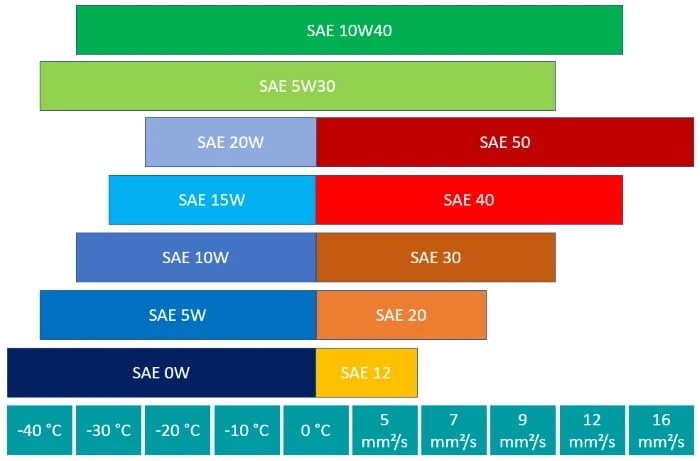
The viscosity describes the flow behavior of the oil. It is, so to speak, the resistance of an oil to its deformation. The viscosity depends on the temperature. The oil is rather viscous at low temperatures and thin at high temperatures. Engine oils are divided into SAE classes (Society of Automotive Engineers). The SAE classes are not performance requirements, but merely serve to classify viscosity. Previously, low-viscosity oils such as SAE 10 or SAE 20 were used in winter. In the summer, a change was made to a higher viscous oil. These oils are referred to as monograde oils. Modern multigrade oils such as Hardt Ludwig (SAE 5W-30) are all-season oils. They lubricate reliably in a wide temperature range. The viscosity index (VI) of an engine oil is decisive here. The higher the value, the wider is the temperature range in which an oil is effective. For example, monograde oils have a VI of 100, multigrade oils have a VI of up to 150.
The monograde oils are divided into summer and winter oils, depending on the temperature range in which they act. Summer oils are specified in SAE classes 8-60. The flowability of the engine oil at 100 °C is decisive here. SAE 8 is very thin, SAE 60 is thick. The viscosity at 100 °C is given in mm²/s. Winter oils range from viscosity classes 0W (the «W» stands for winter suitability) to 25W. Oils with 0W are comparatively thin, 25W oils rather thick. In this case, the engine oils are classified according to the lowest temperature at which they can still be pumped. As the name suggests, the multigrade oils cover several temperature ranges and combine the strengths of summer and winter oils. They are suitable for both high and low operating temperatures. The designations of the SAE classes consist of low temperature viscosity and high temperature viscosity. Example: SAE 5W30 is a combination of SAE 5W and SAE 30.
What you need to keep in mind:
The viscosity class required by the engine of a vehicle is specified by the manufacturer. You should only fill the engine with oil of the viscosity class for which it has been approved. Otherwise the required oil pressure cannot be built up in the engine. Overpressure can overload and damage the motor seals. The engine could leak and oil could escape. Too little pressure results in inadequate lubrication in the engine compartment, which leads to increased wear.
Engine oil in winter
For the winter, car or motorcycle drivers do not have to fill the engine with special oil. If you already use a multigrade oil with the classification 5W30 or 10W40, your engine is optimally prepared for the cold areas in Central Europe. Engine oils with the dynamic viscosity 5W protect down to -35 °C, oils with 10W protect up to -30 °C. Engine oils with 0W supply the engine with sufficient lubricant even at -40 °C outside temperature.
Engine oils differences and special forms
A large number of private customers mainly require multigrade oil for cars. However, there are several special forms like HTHS oils and Low SAPS oils which we would like to clarify. In addition, special engine oils are also required in motorcycles, tractors and vintage cars. This makes it difficult to mix different oils together.
Fuel-efficient oil
Fuel-efficient oils consist of low-viscosity engine oils (synthetic or semi-synthetic) and special additives which improve the lubricating properties. In the engine, they guarantee low mechanical friction losses and thus save fuel. Depending on the driving style, this can lead to savings of 1%-6%. Whether an engine can tolerate fuel-efficient oil is stated in the manufacturer’s specifications. If the engine has a 0W or 5W release, it can be operated with fuel-efficient oil.
Longlife oil
Longlife oil is specially developed for vehicles with longlife service. Their engines are built for extended oil change intervals. It is a synthetic oil with a low friction character, typically in the 0W-30 and 0W-40 range. The oil is particularly resistant to ageing. It can be used longer than oils with standard oil change intervals (e.g. every 15,000 kilometres) when driving gently. The oil change intervals then move between 30,000 and 60,000 kilometers, depending on the vehicle type. Longlife oil is more expensive than regular engine oil, but the costs are amortized by the longer replacement intervals.
Get power, speed and quality
test our strength on long and chellenging routes
BECOME A DISTRIBUTOR
Get top engine performance with the power of hardtoil
See why HardtOil is the lubricant experts trust.

made in germany

advanced technology

for all brands

iso certified

security hologram
highest standarts
contact us
For inquiry fill our short feedback form or you can also send us an email and we’ll get in touch shortly